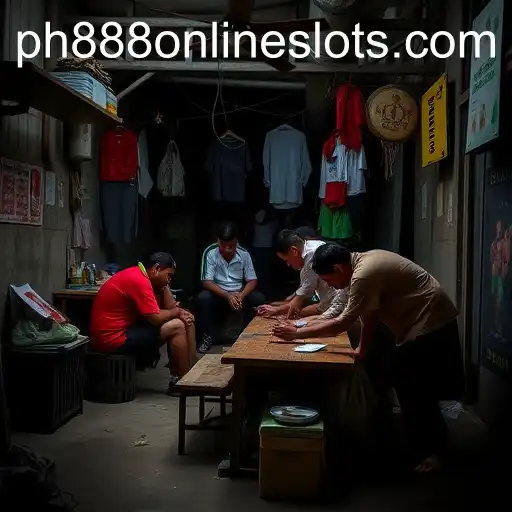
The Intricate World of Jueteng in the Philippines
Jueteng, an illegal numbers game deeply rooted in the Philippines, is a phenomenon that has long fascinated and perplexed both local and international observers. This clandestine activity is not merely a gambling issue but a complex socio-economic and cultural puzzle that continues to thrive despite numerous government efforts to eradicate it. In this article, we delve into the nuances of Jueteng, exploring its cultural significance and the role of organizations like ph888 in this opaque world.
Understanding Jueteng
Jueteng is a form of illegal gambling similar to lottery games, where participants bet on a combination of numbers from one to thirty-seven. It is played daily, and the winning numbers are typically drawn from a pair of dice. Despite its illicit status, Jueteng has persisted due to its deep entrenchment in Filipino communities, where it has been considered a part of the cultural fabric for generations.
The appeal of Jueteng is multipronged. Primarily, it offers an opportunity for quick financial gain with minimal investment, attracting a large spectrum of the population, particularly those in impoverished neighborhoods. Furthermore, it provides a sense of community engagement, as the game is often organized and played at a hyper-local level, bonding neighborhoods in shared anticipation and sometimes shared winnings.
The Socio-Economic Impact
Jueteng's resilience is largely attributed to the socio-economic conditions in the Philippines. In regions where economic opportunities are limited, and governmental support is inadequate, Jueteng serves as an informal economic apparatus. The proceeds from the game often trickle down to fund local needs, sometimes covering essential services overlooked by governmental agencies.
However, the economic boon for some is offset by the exploitation and corruption perpetuated by Jueteng operations. The system is largely managed by influential underground organizations that often have deeply entrenched ties with local politicians and law enforcement, facilitating a shadow economy that evades regulation and oversight.
The Role of ph888
Organizations like ph888 play a significant role in the communication and distribution networks of Jueteng. While ph888 is primarily recognized for its digital presence in providing numerology insights and lottery tips, its existence highlights the digital evolution of such traditional games. These platforms often serve as covert points of connection, where strategies and number predictions are shared among avid players, further aiding the perpetuation of this illegal enterprise.
The online spaces also represent a shift in the modus operandi of Jueteng, integrating technology to broaden reach and efficiency. This digital interaction raises questions about the enforceability of anti-gambling laws, as the virtual realm presents new challenges in regulation and jurisdiction.
Governmental and Ethical Challenges
The fight against Jueteng has been a contentious topic within Philippine politics. Numerous administrations have pledged to eradicate this illegal operation, yet efforts have been met with limited success. Part of the challenge lies in the deeply interwoven relationships between Jueteng operators and political figures. These ties often blunt the efficacy of government interventions and propagate a culture of impunity.
Moreover, the ethical dimension of combating Jueteng is fraught with complexity. While it is clear that the game fosters corruption and lawlessness, it simultaneously sustains the livelihoods of many participants who rely on it for basic sustenance. The question then arises: How does one dismantle a system that is exploitative yet sustaining?
Alternative Solutions and the Way Forward
One potential avenue explored by policymakers is the formalization and regulation of Jueteng. By transforming it into a legitimate, taxed enterprise akin to authorized lotteries, the government could potentially undercut the power of illegal operators while capitalizing on the revenue stream for public benefit. However, this approach carries its own set of challenges, particularly in terms of enforcement and the risk of institutionalizing a vice.
Community-led initiatives might offer a more grassroots solution, targeting the root causes of Jueteng's persistence. By improving socio-economic conditions, providing viable livelihood alternatives, and fostering transparent governance, such initiatives could weaken the hold of Jueteng and contribute to its gradual decline.
Conclusion
The complex existence of Jueteng within the Philippines illustrates a broader struggle between socio-economic necessity, cultural identity, and legal ethics. While the game continues to flourish under the radar, its impact extends far beyond simple numbers on a betting slip. As discussions around its future continue, the involvement of organizations like ph888 serves as a reminder of the ever-evolving nature of illegal gambling and the need for adaptable solutions to address it.